Interdisciplinary Coordination
Integrated engineering-interfaces managed, clashes removed, change controlled.
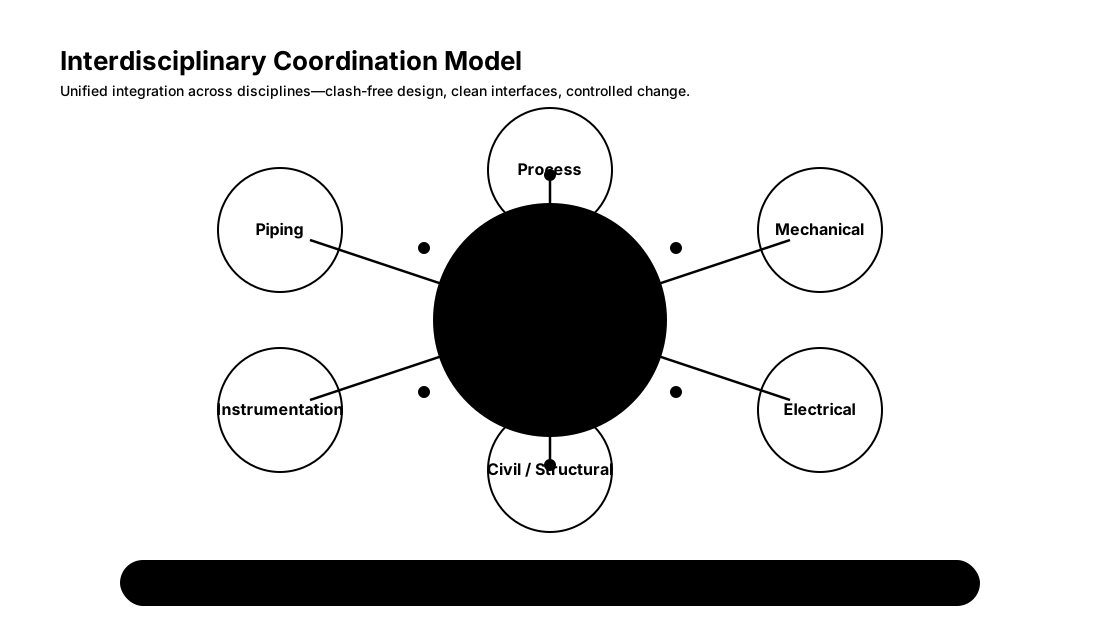
EPC performance depends on coordination. Solvenow aligns process, piping, mechanical, civil/structural, electrical, and instrumentation so deliverables stay consistent, constructable, and execution-ready.
How we coordinate
We run interdisciplinary integration as a governed engineering activity-not an afterthought-so design decisions remain traceable and revisions stay controlled.
- Single integrated model / drawing governance to maintain consistency
- Regular interdisciplinary reviews and coordination workshops
- Interface management between disciplines, vendors, and contractors
- Model-based clash detection and resolution tracking
- Change control workflows to prevent uncontrolled rework
- Constructability alignment with execution constraints
Where coordination creates value
Fewer RFIsClean interfaces reduce ambiguity on-site.
Less reworkClashes resolved early, not during construction.
Faster progressStable design = smoother procurement and execution.
Coordination model
A hub-and-spoke coordination approach ensures every discipline feeds into a governed integrated design, supported by reviews, interface control, and traceable change management.
Governance practices that keep coordination effective
- Defined review cadence + closure tracking (actions, comments, and resolutions)
- Interface registers and discipline handover checkpoints
- Consistent revision control, document numbering, and approval routing
- Model-based issue tracking to avoid lost coordination feedback